Issue 065
Why bad decisions make perfect sense
September 30, 2026
From me
Every decision is a cost versus benefit calculation. But the calculation changes depending on the time horizon you apply.
The shorter the time horizon, the easier it is to overvalue immediate rewards while obscuring delayed costs. The shorter the time horizon, the easier it is to rationalise a bad decision, because the calculation is incomplete.
Instead of asking if a choice makes sense today, this month, this year, or even the next five years, evaluate its lifetime value. That means assessing the net value on your life resources across the short, medium, and long term, so nothing is hidden from view.
From skipping a workout to changing careers, optimising for your lifetime forces you to account for the compounding effects of your choices. You stop asking whether this makes sense now, and start asking whether it makes sense for the rest of your life.
From others
Harvard Business School professor Clayton Christensen on miscalculating the cost of a decision:
"The marginal cost of doing something 'just this once' always seems to be negligible, but the full cost will typically be much higher."
Source: How Will You Measure Your Life? (2012)
Philosopher Derek Parfit on why we struggle to think long-term:
"We might neglect our future selves because of some failure of belief or imagination."
Source: Reasons and Persons (1984)
For you
Which decision gets easier when you look at it using a lifetime perspective?
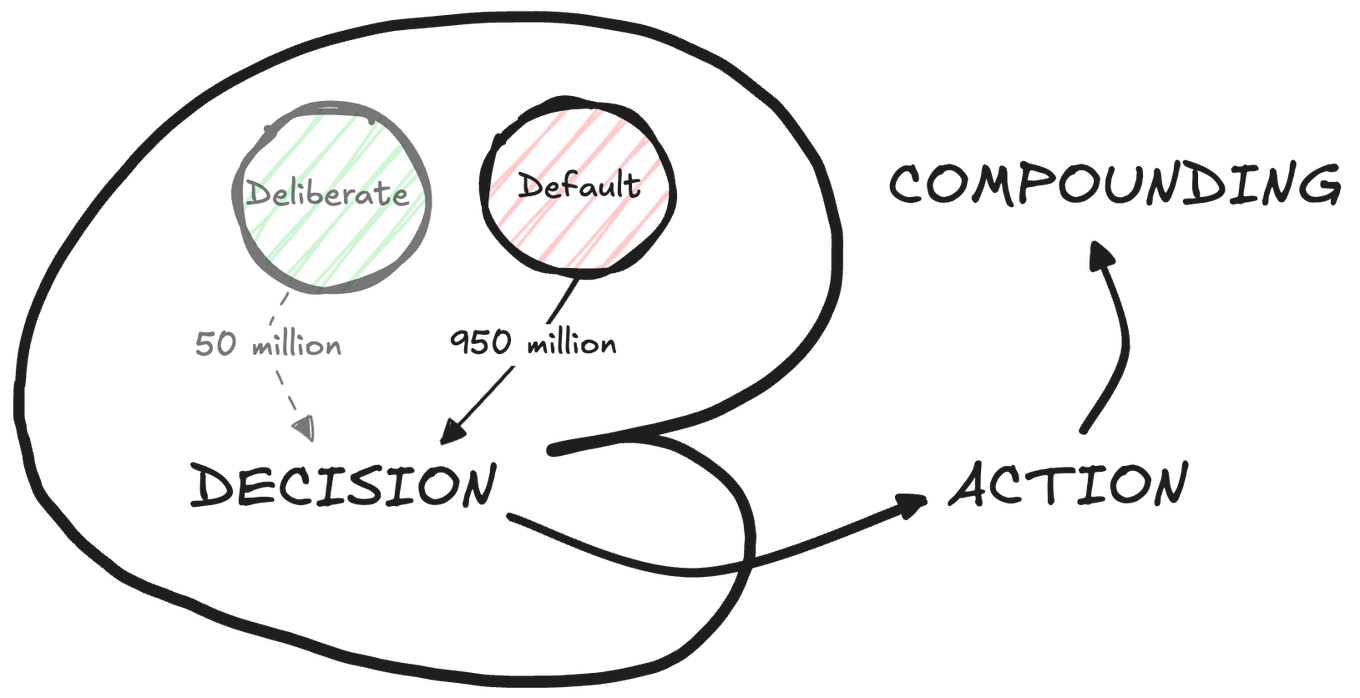
P.S. We make most of our decisions using our default misconcepts. But the quality of those defaults depends on the quality of our deliberate misconcepts. Which is why it pays to continuously iterate and improve our misconcepts set.
If this was useful, the next one will be too.
Subscribe →