Misconcepts
Your Life Resources Are Finite
April 21, 2026
By Syn Yun Phee & David Wang
In the first two articles, we established that misconcepts, the fallible explanations you hold about how the world works, determine both your internal experience and your external results. And while life can seem infinitely complex, everything you ever do is fundamentally improving a misconcept or implementing one.
If those are the only two things you can ever do, what are you actually spending when you do them? What are the raw resources used to update and implement misconcepts?
The answer is life resources. Every time you improve or implement a misconcept, you draw on a set of finite resources. These are the currency of your life, and you are spending them constantly, whether or not you are conscious of it.
Every decision you make requires an expenditure of at least one of them. So does every action you take. This is why life resources sit alongside misconcepts, arbitrary life goalsA conjectured desired state that an individual chooses to pursue.Full definition (opens in a new tab)→, and opportunity cost as one of the four high-level misconcepts.
Life resources are finite, giving rise to opportunity cost in every decision you make across an entire lifetime. Understanding your resources is the prerequisite to spending them well.
This article covers all six.
Primary and secondary life resources
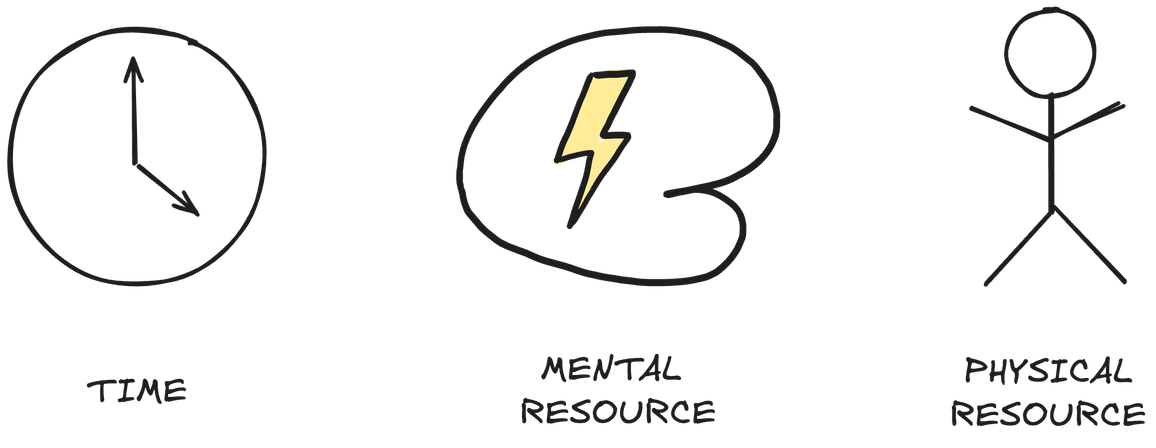
Primary life resources are those you are born with. Time, mental resource, and physical resource are the foundational inputs you draw on whenever you improve or implement a misconcept. They are what everything is built from.
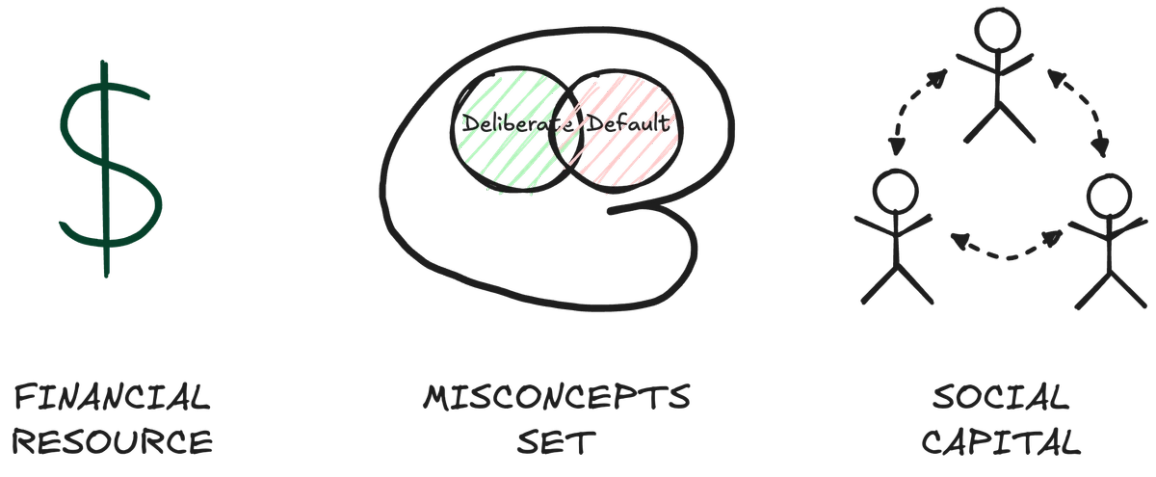
Secondary life resources are those you acquire after birth, either inherited or by converting primary life resources. Financial resource, your misconcepts set, and social capital all fall into this category.
Once acquired, they can be converted back into primary resources or into other secondary ones. Money buys the food, shelter, and conditions your physical resource needs to function. Invest it well and you can buy back time. Build the right relationships and you gain access to knowledge that improves your misconcepts set. Develop a high-quality misconcepts set and your financial resource grows from the same time and effort.
One note before we go further. This is our current fit-for-purpose misconceptA misconcept that has been improved to the point at which further improvement yields diminishing marginal utility and unacceptably high opportunity cost.Full definition (opens in a new tab)→ about life resources, balancing simplicity with sufficient explanatory power. Like any misconcept, it is fallible. We encourage you to improve upon it and make it fit-for-purpose for yourself.
Time
Your lifespan is the time you have in this world, and until ageing and disease are solved, it is finite. While each person's lifespan differs, shaped in part by factors outside their control such as genetics and early development, one thing holds for everyone. Time is non-renewable and constantly depleting.
Every other resource can, to some degree, be regenerated or converted in the short and medium term. You can recover your mental resource with sleep, strengthen your physical resource through exercise, earn more money, deepen relationships, and expand your misconcepts set. Time you cannot get back. Not a single second of it.
This moment is the most time you will ever have. Time flows in one direction only, at a rate no one controls, with no guarantee of how much remains.
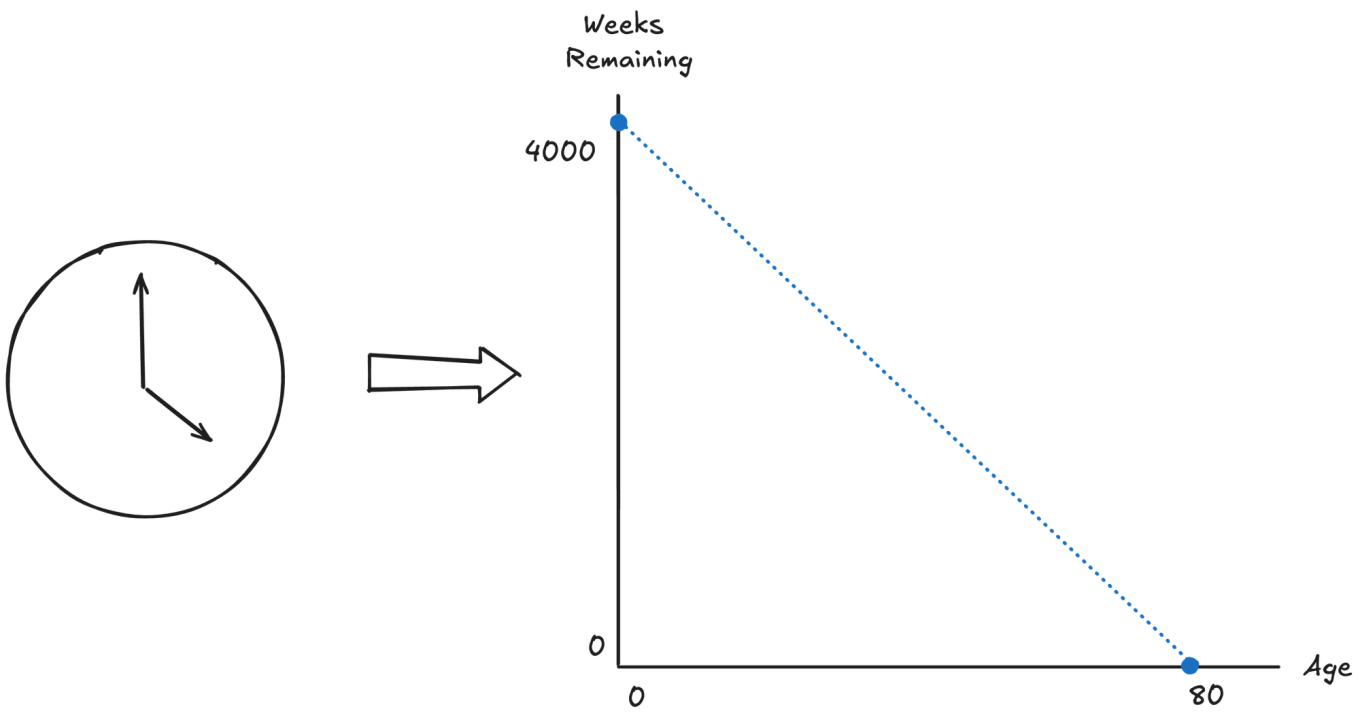
An average lifespan of 80 years is roughly 4,160 weeks.
At 20, you have around 3,120 remaining.
At 30, around 2,600.
At 40, around 2,080.
At 50, around 1,560.
These are estimates, not promises.
Most people know this intellectually but feel it only occasionally, in moments of loss or transition. Awareness of it as a working reality, rather than an occasional reminder, changes how you see most decisions.
You cannot create more time, only decide how to spend what you have. That makes every decision an ongoing series of opportunity cost assessments. Every hour spent on one thing is an hour permanently unavailable for something else. Small differences in how you spend those hours, maintained consistently, produce very different trajectories across a decade. What those assessments look like depends on your goals and your life resource context. There is no universally correct answer.
Not all activities are equal in what they return on your time, and clarity on your goals is what allows you to tell the difference and prioritise accordingly. That clarity matters because time is the one resource whose loss is never recoverable.
Once you feel the weight of that finitude, time freedomThe state in which you can sustain your desired consumption level indefinitely without any further input of primary life resources (time, mental resource, and physical resource).Full definition (opens in a new tab)→ emerges as a natural goal and a logical response to a resource you cannot recover. It is the point at which you can sustain your desired lifestyle without further exchanging your primary life resources to do so. You are no longer required to be in a particular place, at a particular time, doing a particular thing. The time you have left becomes fully yours to direct.
Mental resource
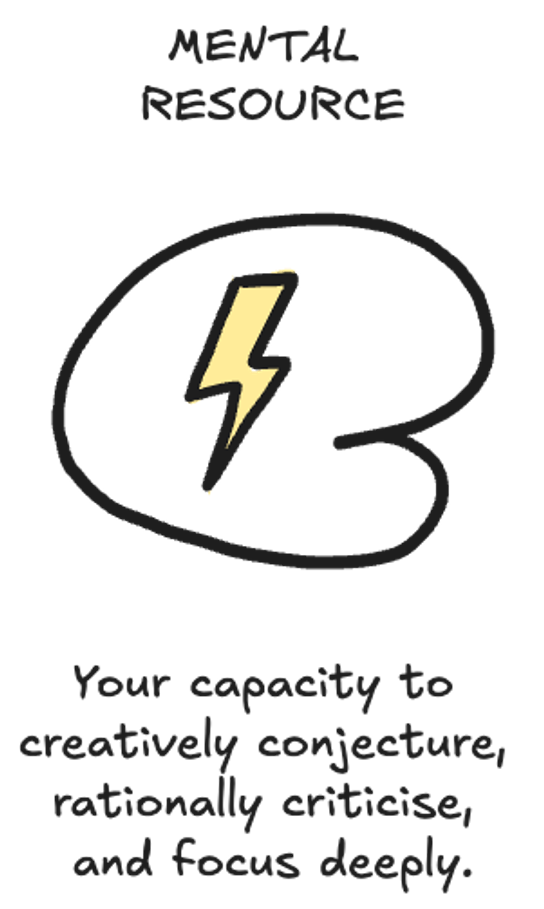
Your mental resource is what you draw on when you think creatively, critically, or focus deeply. It is what gives you access to your deliberate misconceptsThe set of misconcepts accessed through conscious mental effort (System 2 thinking).Full definition (opens in a new tab)→ rather than leaving you at the mercy of your defaults.
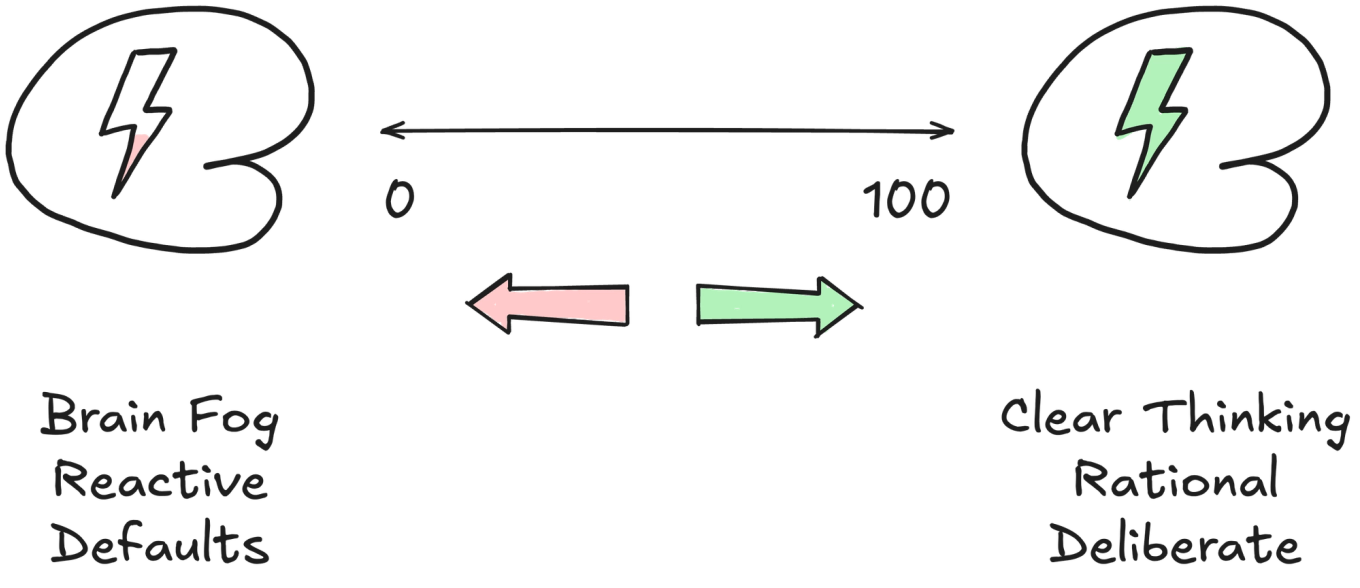
Think of it as a level on a scale from 0 to 100. At a high level, your mind is clear. You can think creatively and critically, hold complexity without feeling overwhelmed, and bring your deliberate misconcepts to bear on the decisions that matter. At a low level, brain fog sets in. Effortful thinking becomes harder. You rely increasingly on defaults, often ones you would not endorse if you stopped to examine them.
The level matters more than most people realise, because it does not just affect your cognitive abilities, it changes your efficiency. When your mental resource is high, tasks cost less of it and take less time. When it is low, the same task costs more, takes longer, and produces poorer results. The same hour of work yields meaningfully different output depending on the state you are in.
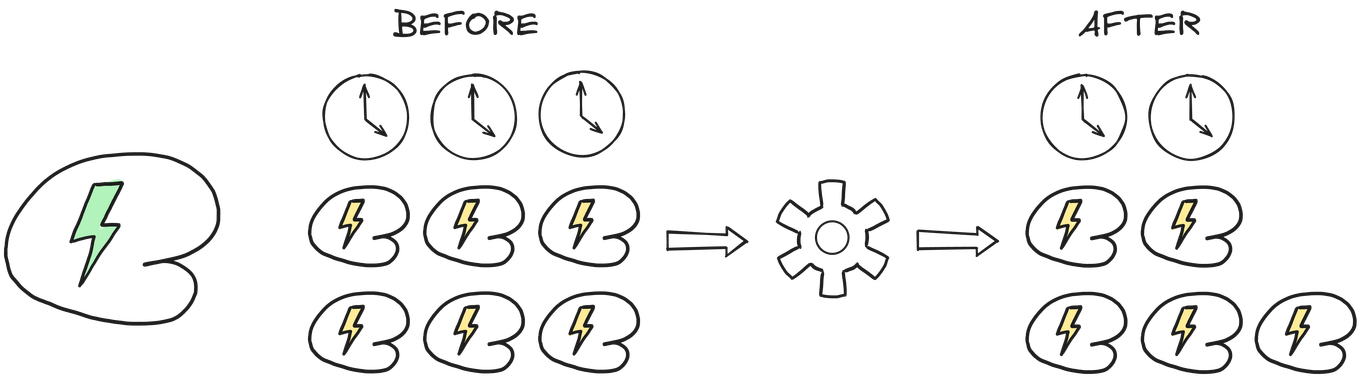
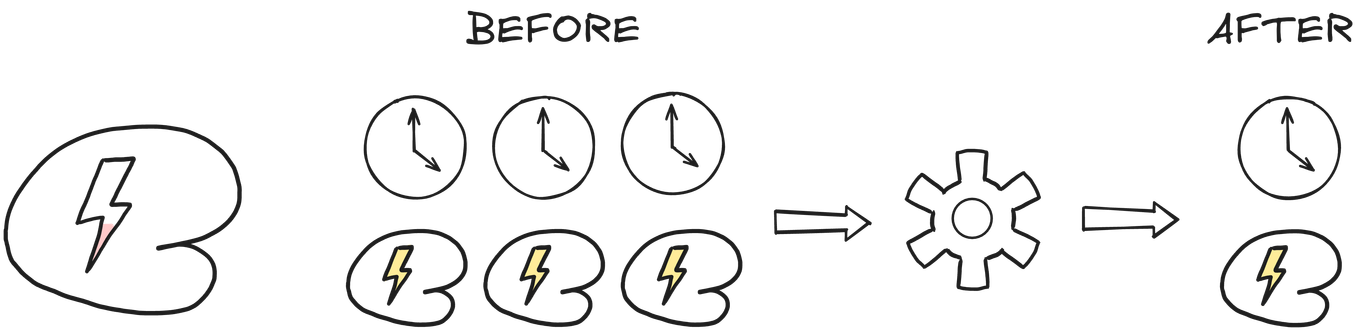
This level-dependence compounds further because recovery works the same way. Rebuilding mental resource is faster when the level is already high, and slower when it has been depleted. The resource gets harder to rebuild precisely when it most needs rebuilding.
A high level leads to less cost for the same task and faster regeneration. A low level leads to more cost and slower regeneration. This adds a layer of complexity to your opportunity cost assessments, as you must account for your current resource level when deciding whether and how to use it.
The goal is not to minimise its use but to use it well on the work that matters most, and protect it from unnecessary depletion. Mental resource depletes through effortful thinking and deep work. Research suggests most people can sustain genuine deep work for around three to four hours a day before meaningful cognitive fatigue sets in. Chronic stress, anxiety, and loneliness accelerate that depletion further. The highest-ROI levers for regeneration are sleep, nutrition, exercise, active leisure, and positive social connection.
In the short term, mental resource oscillates with work and rest. But over the medium and long term, what you direct it toward matters as much as how you manage it day to day. Working toward meaningful goals tends to build rather than deplete it, producing an upward trajectory over time.
Your defaults dominate most of your moment-to-moment interpretation of the world. A high mental resource level gives you access to your deliberate higher-quality misconcepts instead, generating feelings of clarity rather than the friction that low-quality defaults produce. More importantly, it is the only condition under which you can intentionally shift a high-quality deliberate misconcept into your default setThe set of misconcepts accessed automatically and without conscious effort (System 1 thinking).Full definition (opens in a new tab)→ over time, resulting in steady improvements in your internal experience.
You will not make all one billion lifetime decisions through deliberate misconcepts. The resource cost would be prohibitive. But an effort to apply deliberate misconcepts to even five percent of them, particularly the highest-stakes ones, produces a radically different life trajectory than running entirely on default. Your mental resource level directly determines whether you have that access when it matters most.
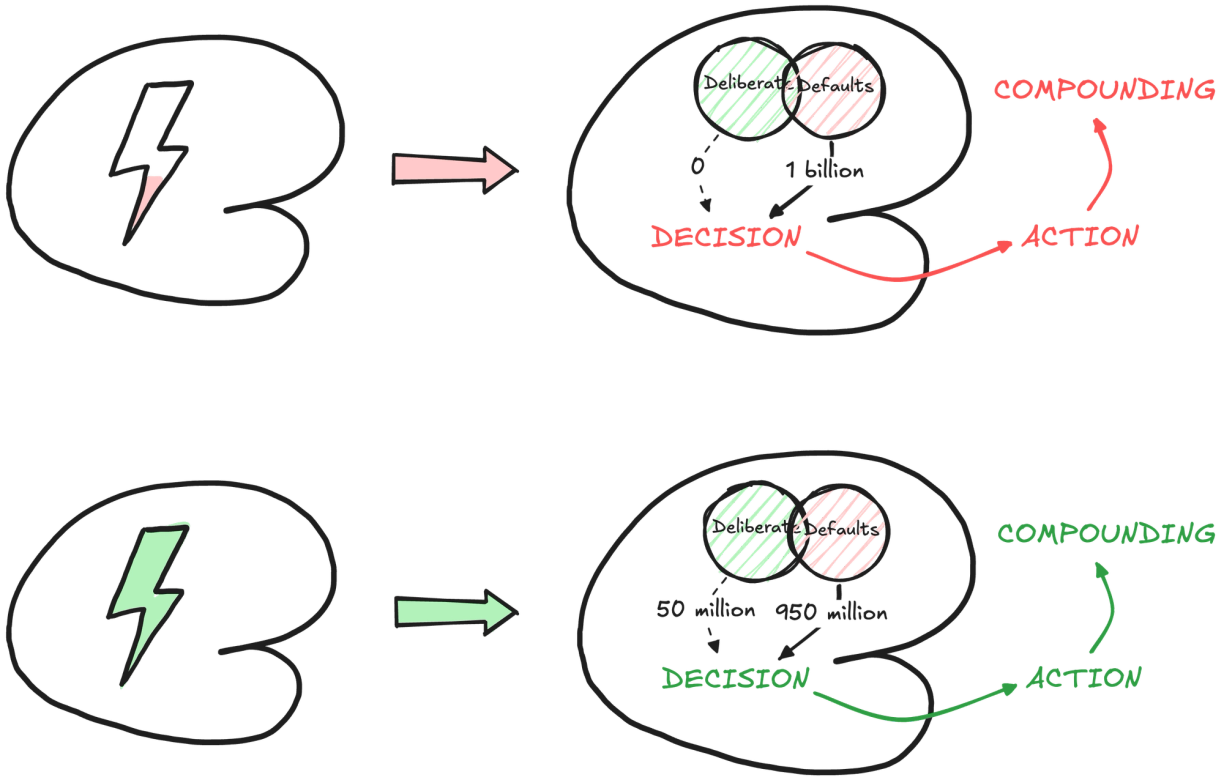
By managing this resource well, you make better decisions more consistently, and compound more reliably toward the life you are actually trying to build.
Physical resource

Your physical resource is the functioning of your biological machinery. It is what allows you to show up and interact with the world.
Across a lifetime, physical resource follows a typical trajectory of rising during early life and development, peaking in early adulthood, then gradually declining with age.
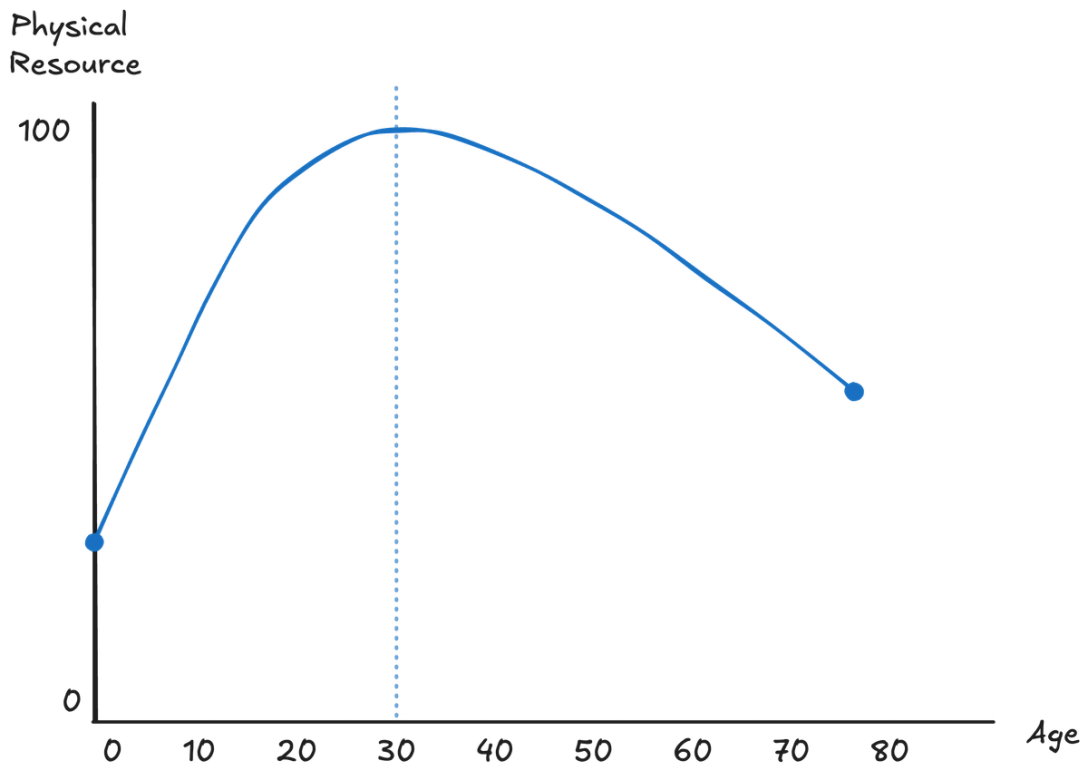
There is meaningful variation in this trajectory. Some of it falls outside your control, shaped by genetics and early development. Some of it is within your control, shaped by nutrition, exercise, and sleep. Every individual has a genetic range that sets their baseline and ceiling, and where within that range you operate depends largely on those adjustable factors. The practical implication is that your physical resource is finite overall, but its trajectory is partially modifiable.
Managing your physical resource is about more than health today. It is about your quality life years, the number of years you live in good health, able to do what you actually want to do. By slowing the rate of physical decline, you can keep your physical resource above the disability threshold for as long as possible.
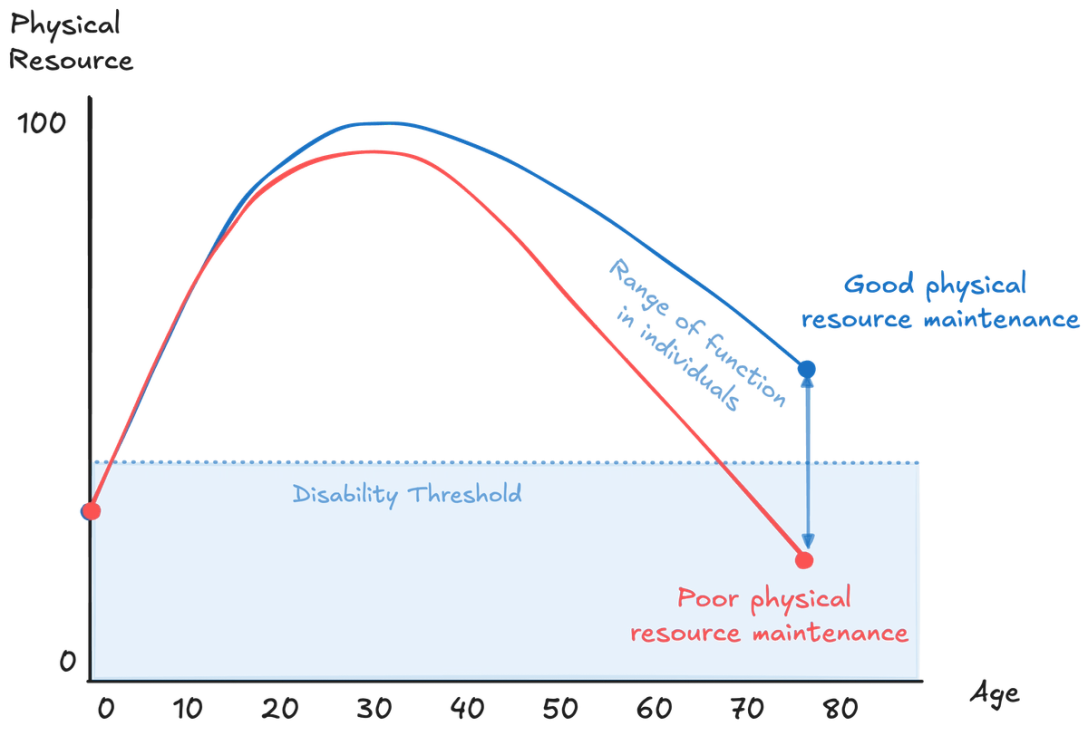
Like mental resource, physical resource has level-dependent properties. When your physical resource is high, tasks require less of it, recovery is faster, and the likelihood of illness is lower. When it is low, tasks cost more, recovery slows, and the immune system is more vulnerable.
A chronically depleted physical resource also places a ceiling on your mental resource. The two are not independent. This adds a layer of complexity to your opportunity cost assessments, as you must account for your current level when deciding whether and how to use it.
Your physical resource levels determine how effectively you can work toward your arbitrary life goals. They shape your daily energy, set your cognitive ceiling, and influence your ability to sustain effort and make good decisions over years.
For time freedom specifically, a high physical resource level not only helps you get there faster, it determines what you can actually do when you arrive. Reaching financial independence at 50 with your physical resource significantly degraded is a different outcome entirely to reaching it with the capacity to be active, present, and engaged.
Financial resource
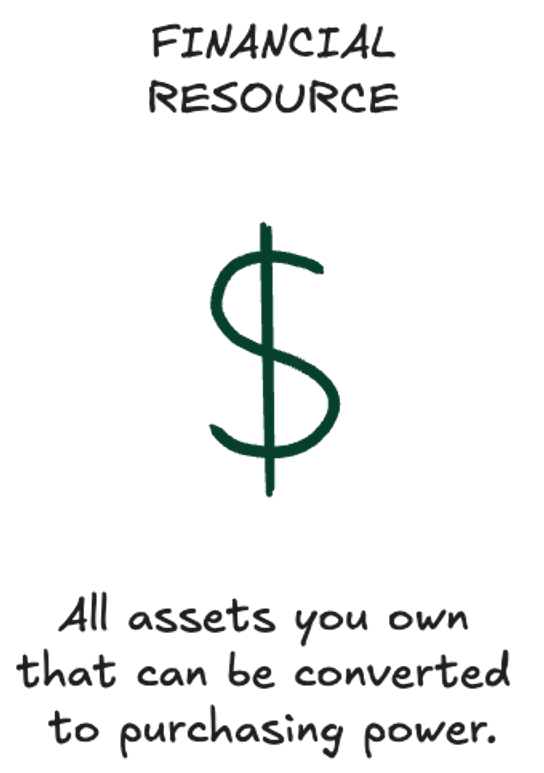
Financial resource represents all the assets you own that can be converted to purchasing power. It serves as a medium for storing and exchanging value. By converting your life resources, most commonly time, mental and physical resource, into financial resource, you can store that value and deploy it at your convenience.
Money is the most familiar form financial resource takes. One useful definition of money is that it is an IOU society issues to track the value you have provided. You trade this IOU for goods and services others provide. They want it for the same reason you do.
Money is an imagined reality. It exists because enough people believe in it and trust the institutions that enforce it as legal tender. Its power lies not in any inherent value but in the collective belief we place in it as a medium of exchange. Without that agreed fiction, the intricately designed pieces of paper and numbers on a screen cannot keep you sheltered, hydrated, or fed.
Financial resource can solve many of the problems you face in modern life. But as Naval Ravikant observed: "Money solves money problems." It is a tool for a specific set of problems, and its usefulness depends entirely on how you use it.
The money cycle
Financial resource management can be understood through the money cycle, which has three components: earning, consumption, and investment.
Earning
Most people begin acquiring money by trading their primary life resources for it, usually through employment in exchange for a salary or wage.
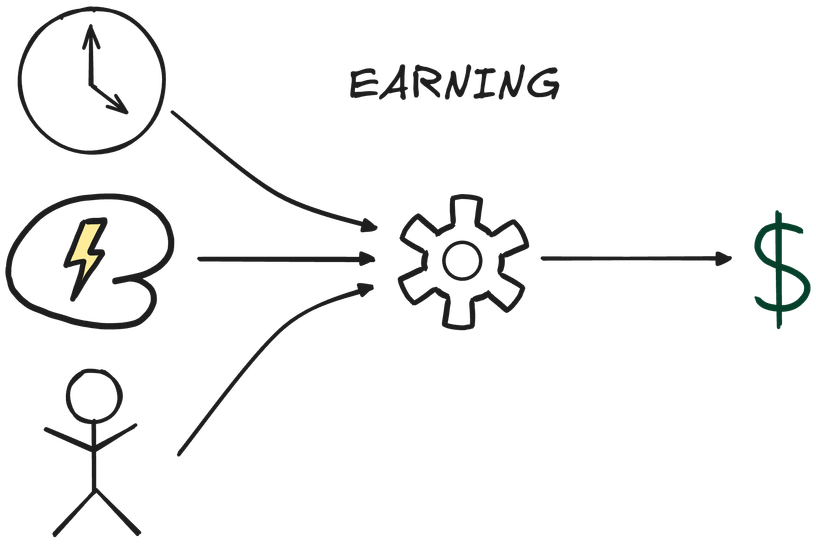
Note: This is a simplification, as employment also builds your misconcepts set through the skills and knowledge you develop on the job, as discussed in the Misconcepts Set section.
Consumption
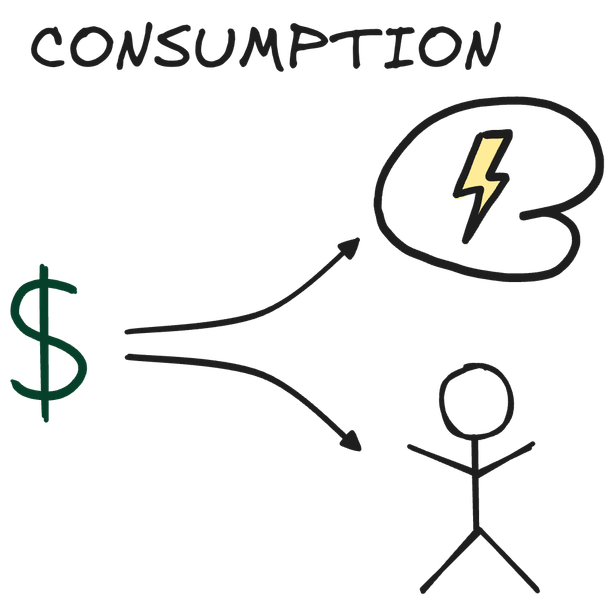
Once earned, money can be traded for goods and services. Some consumption is foundational, meeting basic physiological and safety needs such as food, water, and shelter. Beyond that, consumption serves higher-level needs such as belonging, purpose, and enjoyment.
Lifetime value per dollar spent is the useful metric here. It allows you to assess the short, medium, and long-term effects of a purchase on your mental and physical resources. Goods and services that meet basic needs have an enormous lifetime valueThe net value in life resources across a lifetime — short, medium, and long term — from expending life resources to improve or implement misconcepts.Full definition (opens in a new tab)→ because the return per dollar is survival and health itself. In modern life we tend to take for granted how cheap these basics are relative to what they deliver. It takes a disruption to supply to see what their absence costs. Beyond that threshold, the question shifts to what a dollar genuinely returns to your life resources over time. That assessment is personal, tied to your goals and the opportunity cost of spending it differently.
Investment
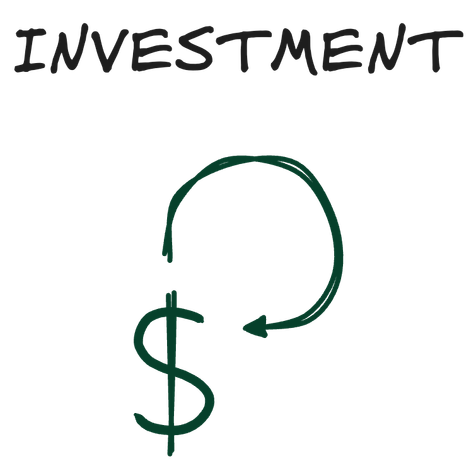
Money can also be converted into assets that generate returns. These returns compound over time, growing the purchasing power of the IOU you originally earned. The longer you are invested, the greater that compounding runs.
Putting it together
With all three components in place, the money cycle looks like this.
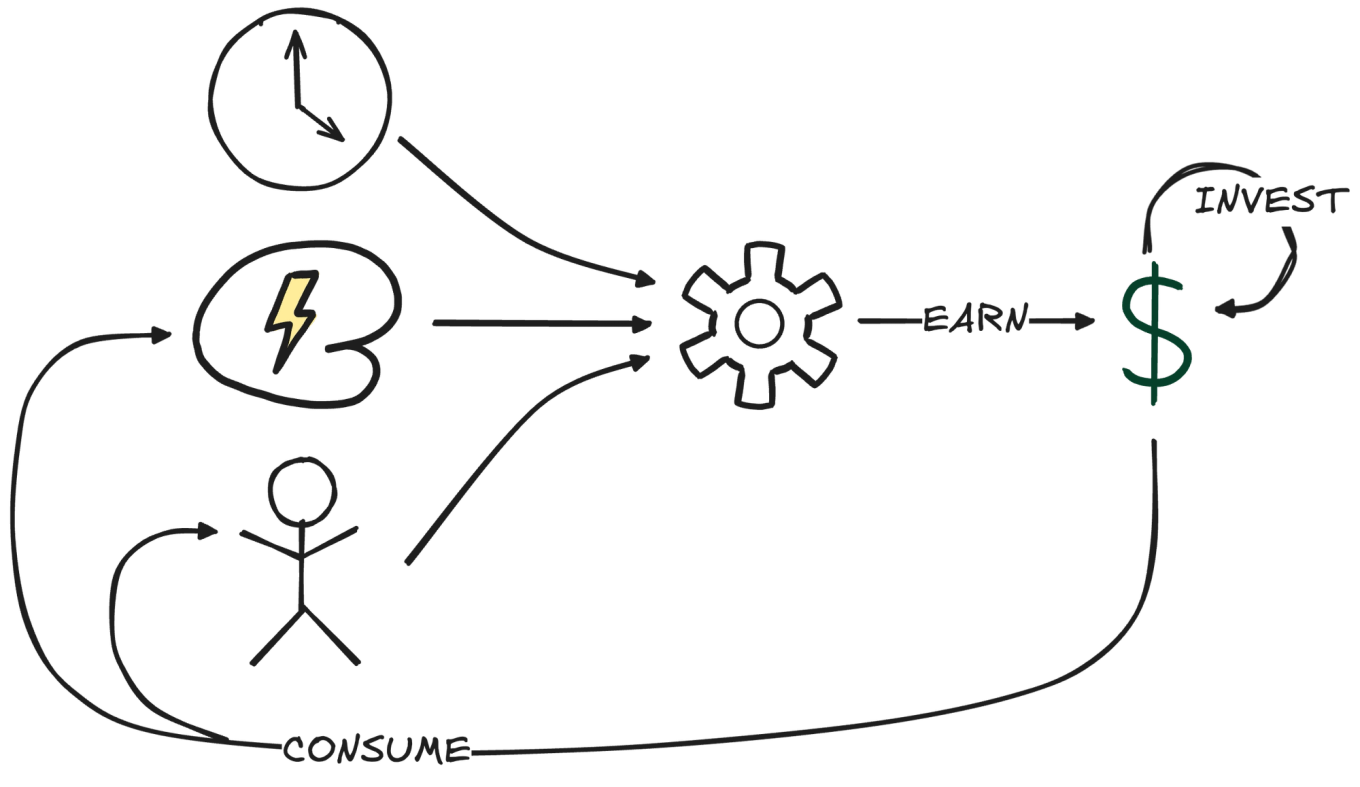
This model reveals something most people never see. When you trace money back to its source, you find your time, mental resource, and physical resource. Money is your primary life resources in disguise. That extra conversion step, life resources into money, then money back into resources, makes it easy to lose track of what money actually represents.
When you see a price tag, you see a number. Translated back into the primary resources it took to earn it, you see something different. If you earn $50 an hour, a $500 purchase is ten hours of your life. That reframing changes the question from "is this worth the price?" to "is this worth what it cost me to earn it?"
Running the cycle over decades
Notice where the non-renewable resource sits in this cycle. Time. No amount of money buys it back. Mental and physical resources can be maintained and partially replenished. But both begin their gradual biological decline from around thirty. Consumption can slow that decline, not reverse it.
Run this cycle over decades and you see every primary resource declining. Time most irreversibly of all.
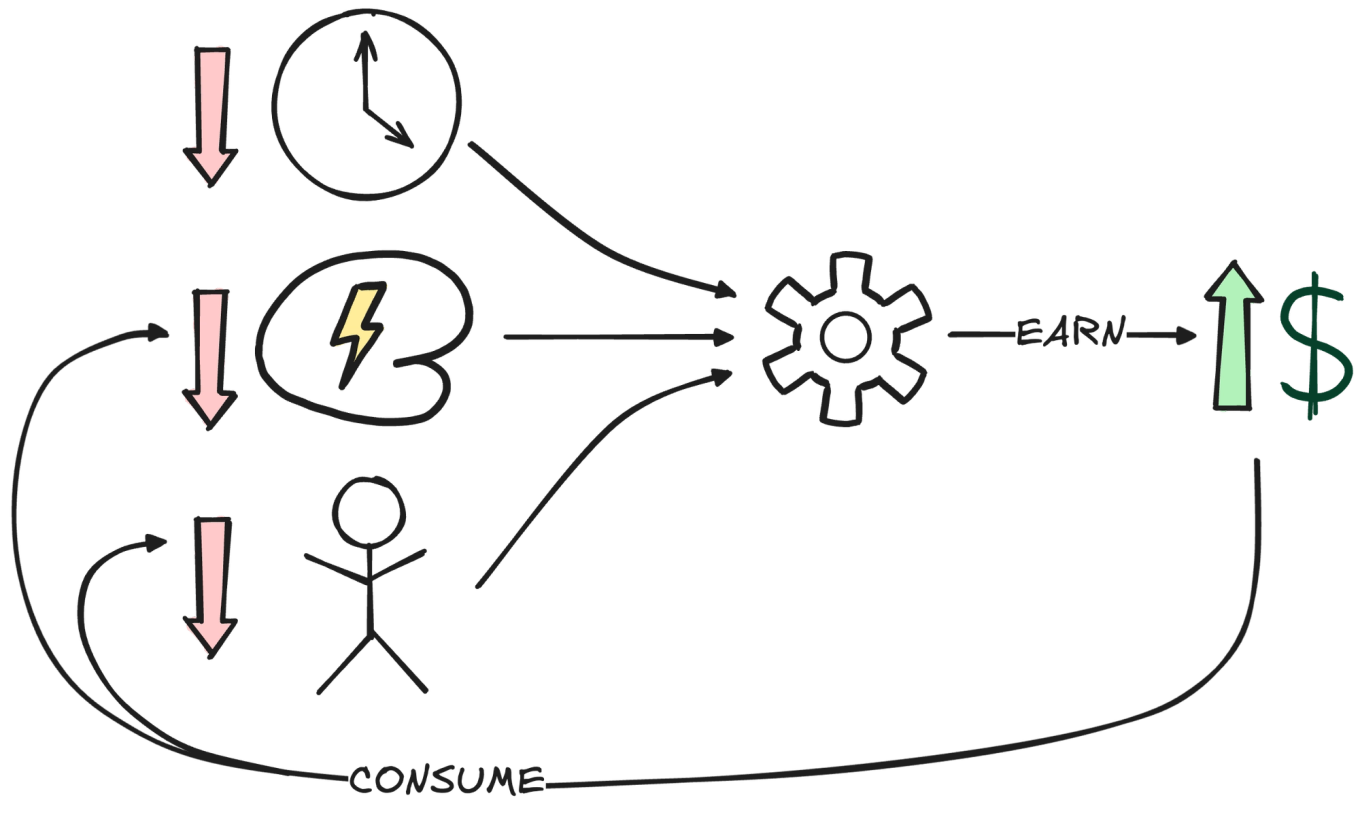
Which raises a question most people never reach. If all your primary resources are declining, what is the point of accumulating financial resource?
The obvious answer is sustaining your biological machinery and meeting your basic needs. The next answer most people land on is strengthening the cycle, earning more, consuming more, enjoying more. That is a reasonable goal. But it keeps time in the equation.
If you follow the logic further, another option appears. Instead of just strengthening the cycle, you can use financial resource to eventually escape it.
Time freedom is the point at which your financial resource sustains your desired consumption level indefinitely without any further exchange of time, mental resource, or physical resource. You are no longer obligated to be in a particular place, at a particular time, doing a particular activity to sustain it. Your time is fully your own.
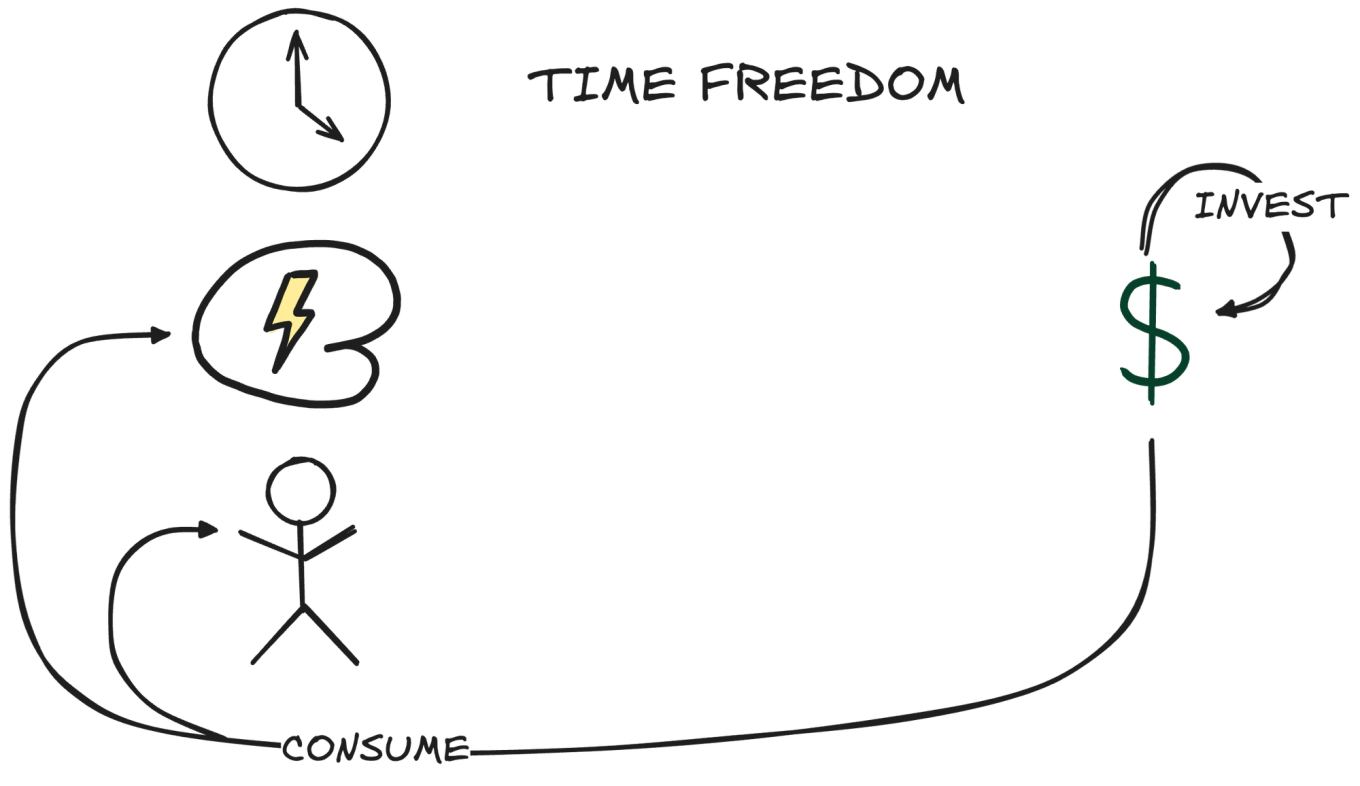
Most people treat time freedom as a retirement-age outcome, something that arrives when working life ends by default rather than something they aim for deliberately. Many have the opportunity to reach it earlier, on their own terms. But most never consider it because no one has framed it as an option.
Misconcepts set
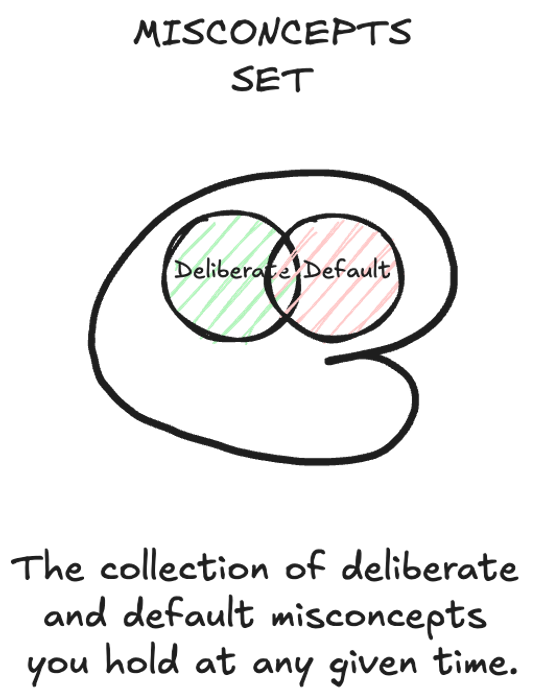
Your misconcepts set is the collection of deliberate and default misconcepts you hold. It is a vital secondary life resource because the misconcepts we hold determine our internal experience of the world and our external influence on it. Every expenditure of life resources ultimately distils down to improving our misconcepts set or implementing from it. Everything we do and experience traces back here.
It is a secondary resource because, beyond a baseline set encoded genetically, it is acquired through the expenditure of primary life resources via learning and experience.
Learning is the acquisition of misconcepts from external sources such as books, media, and other people. We conjecture misconcepts from what we consume rather than passively absorbing it, which means the quality of what we take in depends on the source, the quality of the misconcepts we already hold, and our capacity to critically evaluate both. Learning is efficient but carries a risk. You can acquire many misconcepts quickly, but without error-correction via reality, some will be wrong and you may not know which.
Experience works differently. You implement a misconcept, observe where the actual outcome differs from what you predicted, and error-correct accordingly. It is slower than learning but more reliable, because the feedback comes directly from reality rather than from a source that may itself be wrong.
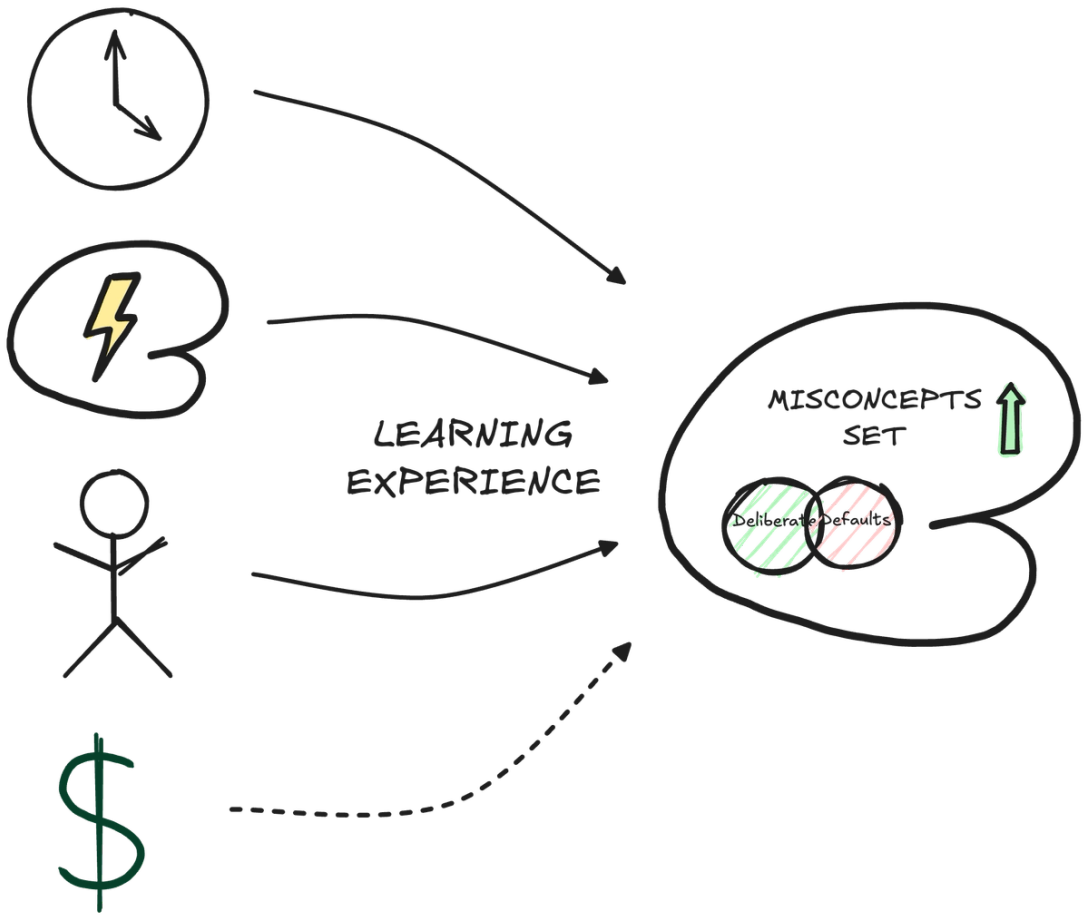
As covered in the previous article, your misconcepts set divides into a deliberate set and a default set, each comprising high, mid, and low-level misconcepts.
The level of a misconcept reflects how frequently it is invoked in your decisions. High-level misconcepts are present in every decision, mid-level in approximately 10%, and low-level in fewer than 1%.
Defaults run automatically and disproportionately shape both your internal experience and your external results. The quality of your deliberate misconcepts sets a ceiling on your defaults.
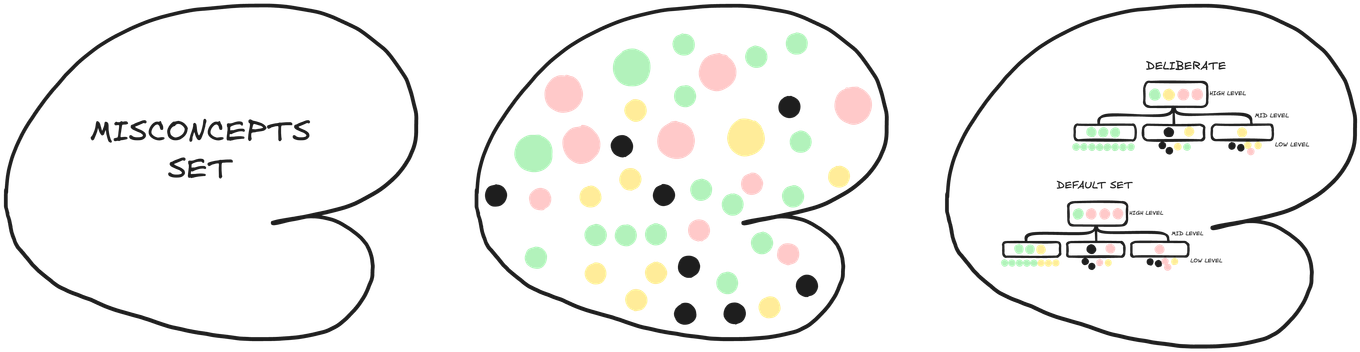
Before you were aware of misconcepts, your acquisition of them was largely non-directed. You absorbed whatever your environment provided, and further acquisition was driven by inherited or unclear goals. The result is a misconcepts set shaped by circumstance rather than intention. Everyone starts this way.
The consequence is a set that is unlikely to be comprehensive, high-quality, or aligned with what you actually want, often producing an internal sense of confusion or unfulfillment, and external compounding that is slow or pointed in the wrong direction.
Think of the misconcepts set you hold right now as the hand you have been dealt. Prior to this point, you lacked the misconcepts to understand why or how to prioritise your own development. Awareness changes that.
With awareness, directed learning and experience become possible. You are able to deliberately pursue the misconcepts with the highest return on your finite life resources, relative to your own self-defined goals. Making this shift requires self-defined arbitrary life goals to act as your goalpost, an honest inventory of your current misconcepts and their quality relative to those goals, and an identified priority misconcept to work on next. Together, these turn passive accumulation into active improvement, with finite life resources allocated toward the highest-ROI updates rather than distributed by whatever the environment happens to offer.
There is one pattern worth naming. Some people achieve significant external success without apparent awareness of misconcepts. This is usually due to a strong bias toward learning and experience within a single domain. There is nothing wrong with this. But concentrated domain success rarely produces a comprehensive misconcepts set, and these individuals often describe an internal sense of unfulfillment despite their external results. Mental and physical resources in particular are frequently sacrificed in the pursuit of domain-specific success, leading to burnout or dissatisfaction that the external results do not resolve.
The quality of your misconcepts is a primary determinant of your internal experience, your external results, and how efficiently your life resources compound toward what matters to you. Deliberate development across levels and domains is how you build toward both. External compounding in a direction you actually chose. Internal peace as your expectations align more closely with reality.
Social capital
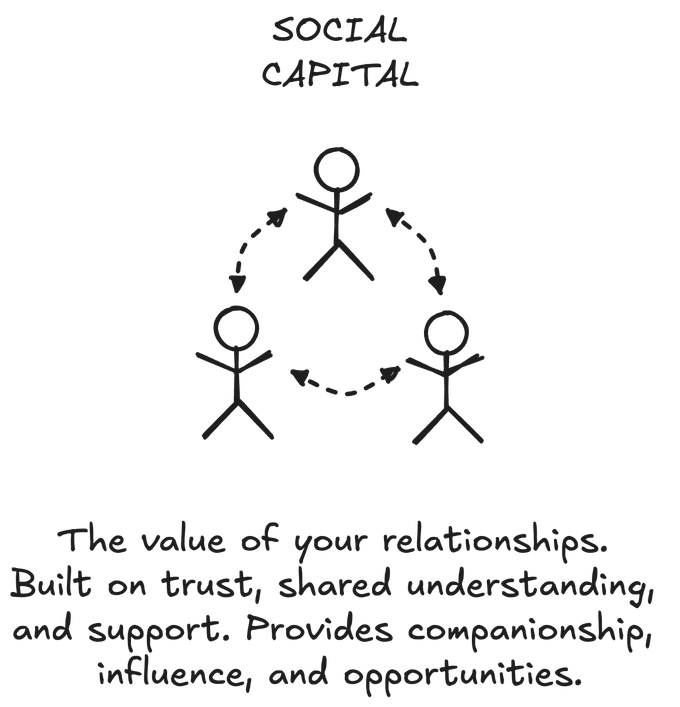
Social capital is the value of your relationships. It is a secondary life resource because building it requires interacting with other individuals and groups, and every interaction draws on your primary and sometimes secondary life resources as inputs.
These interactions produce three categories of output that feed back into your other resources. Mental resource gain from a sense of connection and belonging, intrinsic opportunities through exposure to better ideas and thinking, and extrinsic opportunities through access to what exists within another person's network.
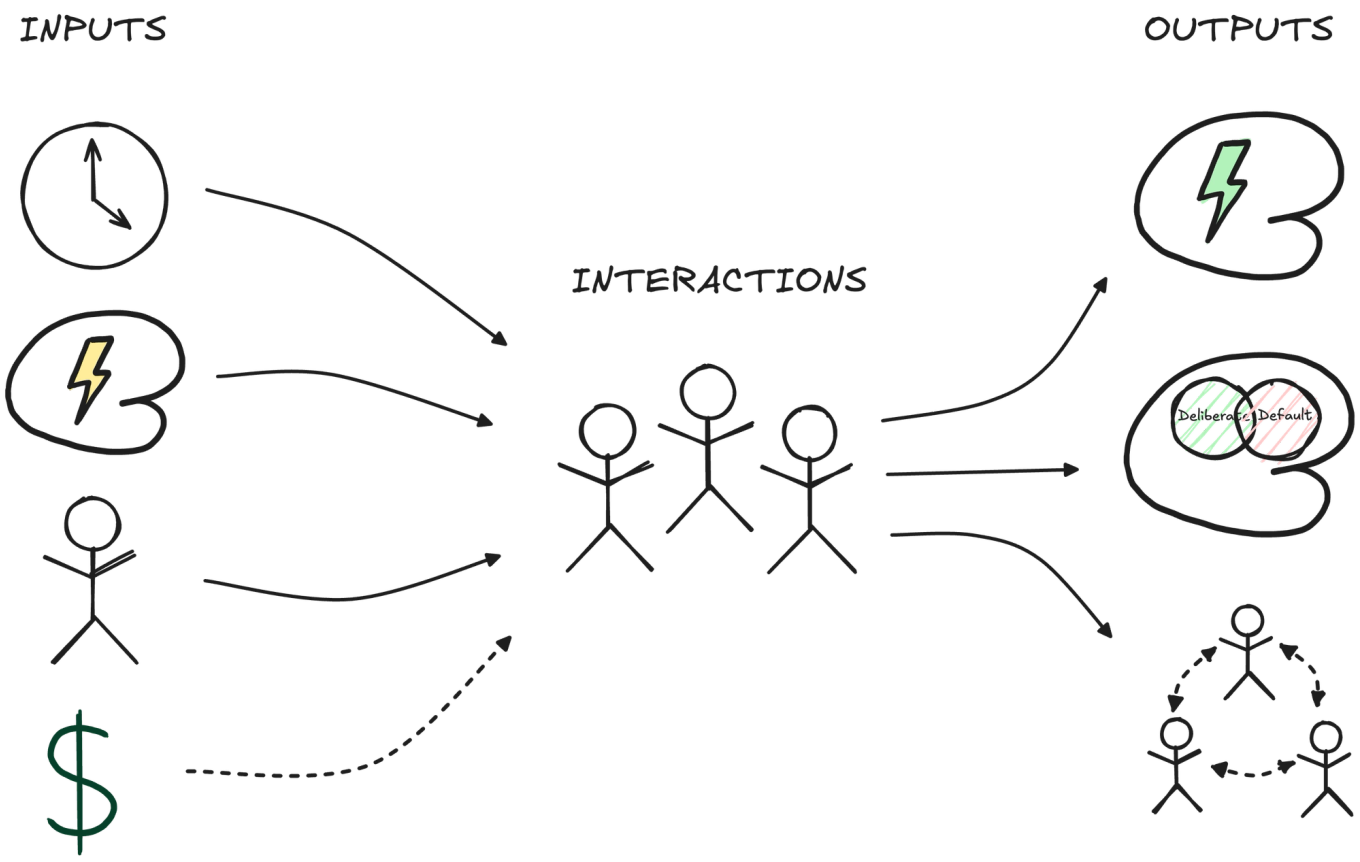
Sustainable social capital is reciprocal. To gain value from your relationships, you must provide value in return. Every meaningful connection depends on a continuous investment of primary life resources to sustain it, and decays when that investment stops.
Social capital exists in different forms. Close relationships provide companionship and emotional support. They also create the conditions in which misconcepts transfer between people, which is why who you spend time with shapes how you think in ways that are often invisible until you look back. Looser connections carry a different kind of value. Access to networks, knowledge, and opportunities that would not otherwise be visible. Both matter.
Regardless of the form, a sustainable relationship is one where output exceeds input for both parties, producing a positive-sum outcome.
Sustainable relationship → Output > Input for both parties
The evidence on why relationships matter is unambiguous. The Harvard Study of Adult Development is one of the longest-running studies on human wellbeing ever conducted. It found that the quality of your relationships, more than money, status, or career success, is the single greatest predictor of long-term physical health and mental wellbeing, making social capital a direct input into your primary resources.
Its reach extends into your secondary resources too. The connections you build open access to opportunities, to higher-quality misconcepts from people who think differently or have already done what you are trying to do, and to social capital itself through introductions into networks that would otherwise remain invisible. All of this feeds back into the broader system of your life resources, reinforcing the interconnected nature of all six.
Life is a multivariate resource management problem
Every life resource influences every other, and the pathways run in more than one direction. Your physical resource sets a ceiling on your mental resource. Your mental resource determines your ability to build your misconcepts set. Your misconcepts set shapes how effectively you earn, invest, and spend. Your social capital accelerates the growth of your misconcepts set and opens opportunities you could not reach alone. And your financial resource, managed well, can eventually buy back time.
Every meaningful goal is a multi-resource allocation problem. Understanding how these resources behave and convert into one another is the prerequisite to getting the highest return on them relative to your goals.
You are always spending your life resources. The only question is whether you are doing it consciously or by default. This article gives you a clear picture of what you are working with, how each resource behaves, and how they connect to one another. What you spend them on depends on your goals.
In the next article, we turn to arbitrary life goals and the question of whether the ones driving your decisions are actually yours.
If this resonated, get Micro Misconcepts in your inbox every Friday.
Subscribe to Micro Misconcepts →