Issue 070
Normal is not a proxy for right
November 4, 2026
From me
If everyone does it, there must be a good reason.
There is a reason, but it may not be the one we imagine.
Like genes, ideas compete to survive. What makes one win isn't always that it benefits the people who hold it, though it can. Some win because challenging them feels disloyal, shameful, or like something is wrong with us for even asking.
This means common does not equal useful.
Socially acceptable does not equal rational.
Traditional does not equal infallible.
Which makes it costly to assume that what's normal is what's right. We make our life decisions based on what we think is right, and every decision comes at an opportunity costThe lifetime value of the next best alternative forgone when expending life resources to improve or implement misconcepts.Full definition (opens in a new tab)→. An unexamined norm can quietly shape the trajectory of our lives through thousands of seemingly inconsequential decisions, its effects compounding over a lifetime.
Normal only tells us which ideas have been most successful at spreading. It doesn't tell us whether they're worth adopting.
From others
Philosopher and mathematician Bertrand Russell on what popularity proves:
"The fact that an opinion has been widely held is no evidence whatever that it is not utterly absurd."
Source: Marriage and Morals (1929)
Psychologist Solomon Asch on what conformity does to sensible people:
"That we have found the tendency to conformity in our society so strong that reasonably intelligent and well-meaning young people are willing to call white black is a matter of concern."
Source: Opinions and Social Pressure (1955)
For you
What are you doing just because everyone around you is doing it?
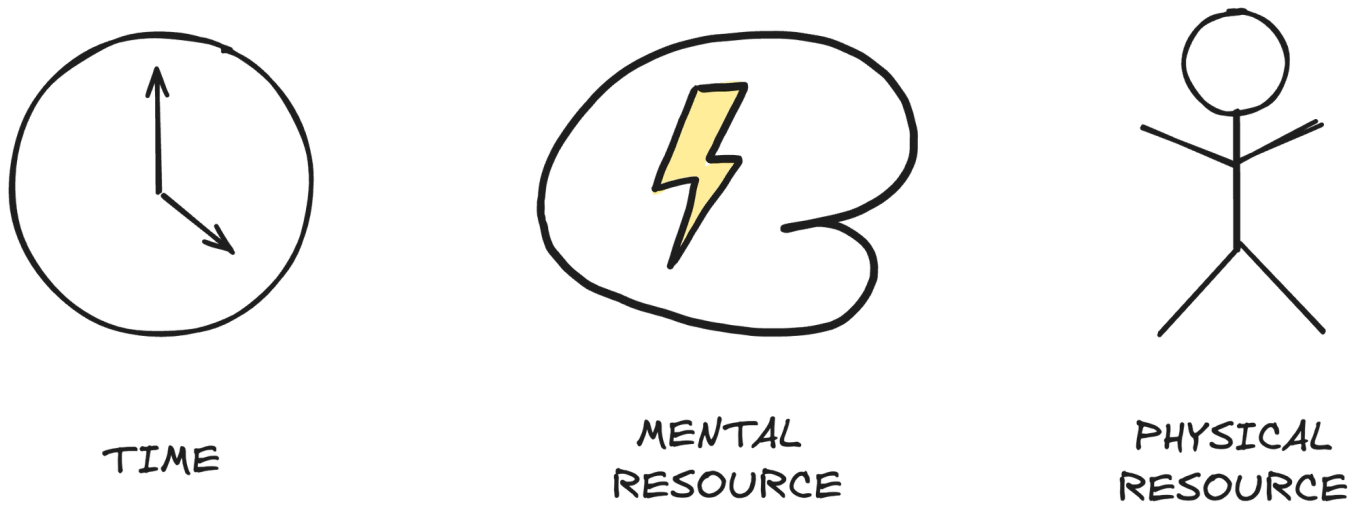
P.S. Our life resources are finite, which means every decision is an opportunity cost decision.
If this was useful, the next one will be too.
Subscribe →